A complete signage and wayfinding system across four floors of one of Tehran's principal museums of Iranian art, designed to guide visitors quietly through a thousand years of objects.
A museum is a building you read with your feet. The Reza Abbasi — a four-floor chronological survey of Iranian art from the 2nd millennium BCE to the 19th century — had a collection that drew visitors from across the country but a signage system that left them lost within minutes of arriving. Our brief was to fix the orientation without competing with the objects.
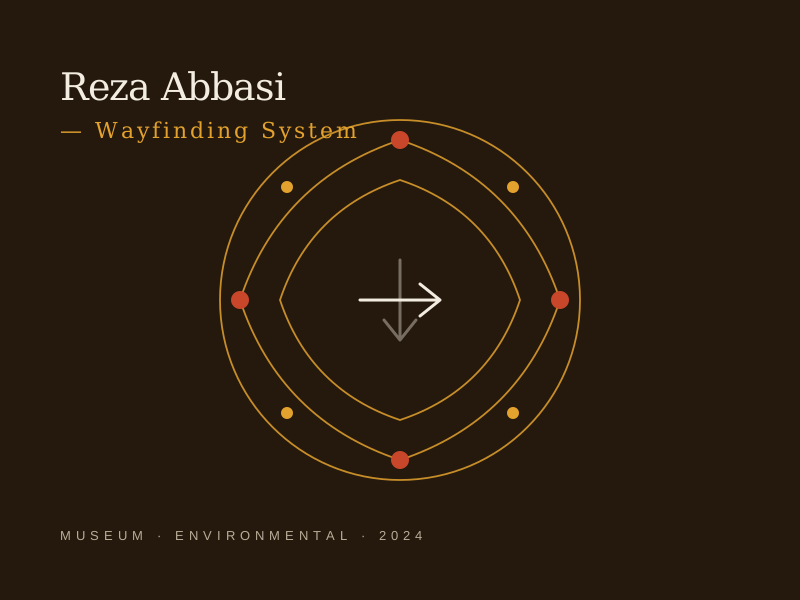
We replaced the museum's cluttered directory maps with a directional system built on a single motif: a four-point compass derived from the cardinal nodes of a Persian astrolabe. Each floor has a colour drawn from the dominant material of its collection — clay, bronze, manuscript, tile — and every sign repeats the compass at the same scale, so a visitor learns the logic once and can navigate the rest by recognition.
"Good wayfinding is invisible. The visitor should never remember the sign, only that they arrived."
Signage is brushed brass on a matte stone-finish backing, with deep-engraved Persian and Latin type filled in black. We held the type to a single weight and a single size per hierarchy level — there are no exceptions, no one-off plaques, no donor plates in a different font. The discipline is what makes it read as a system.
The system was installed across all four floors over the summer of 2024. Visitor surveys in the following season showed a 40% drop in wayfinding-related queries at the front desk.